How I Built a Self-Sustaining Solar Irrigation System for Under $150
Why Sustainable Watering Actually Matters
Before I get into the build, I want to talk about water. Specifically, where your garden water comes from, because it matters more than most people realize.
Rainwater is better for your garden than tap water. This isn’t just a feel-good statement. Rainwater has no chlorine, no fluoride, and no added chemicals. It’s naturally slightly acidic, which most vegetables prefer. It’s also closer to ambient temperature, which means it doesn’t shock plant roots the way cold tap water can. When you water with rainwater you’re giving your plants exactly what nature intended.
Tap water works, but it’s a compromise. Municipal water is treated for human consumption, not plant health. The chlorine that keeps your drinking water safe also disrupts the beneficial microbial ecosystem in your soil over time.
One thing to never do: use AC condensate water on edible plants. A lot of people see the steady drip from their air conditioning condensate pump and think “free water.” Don’t do it. AC condensate can contain copper and other metals leached from the coils, mold, bacteria from the condensate pan, and potentially harmful compounds depending on the age of your system. Fine for watering grass in a pinch, but not something you want going onto food you’re going to eat.
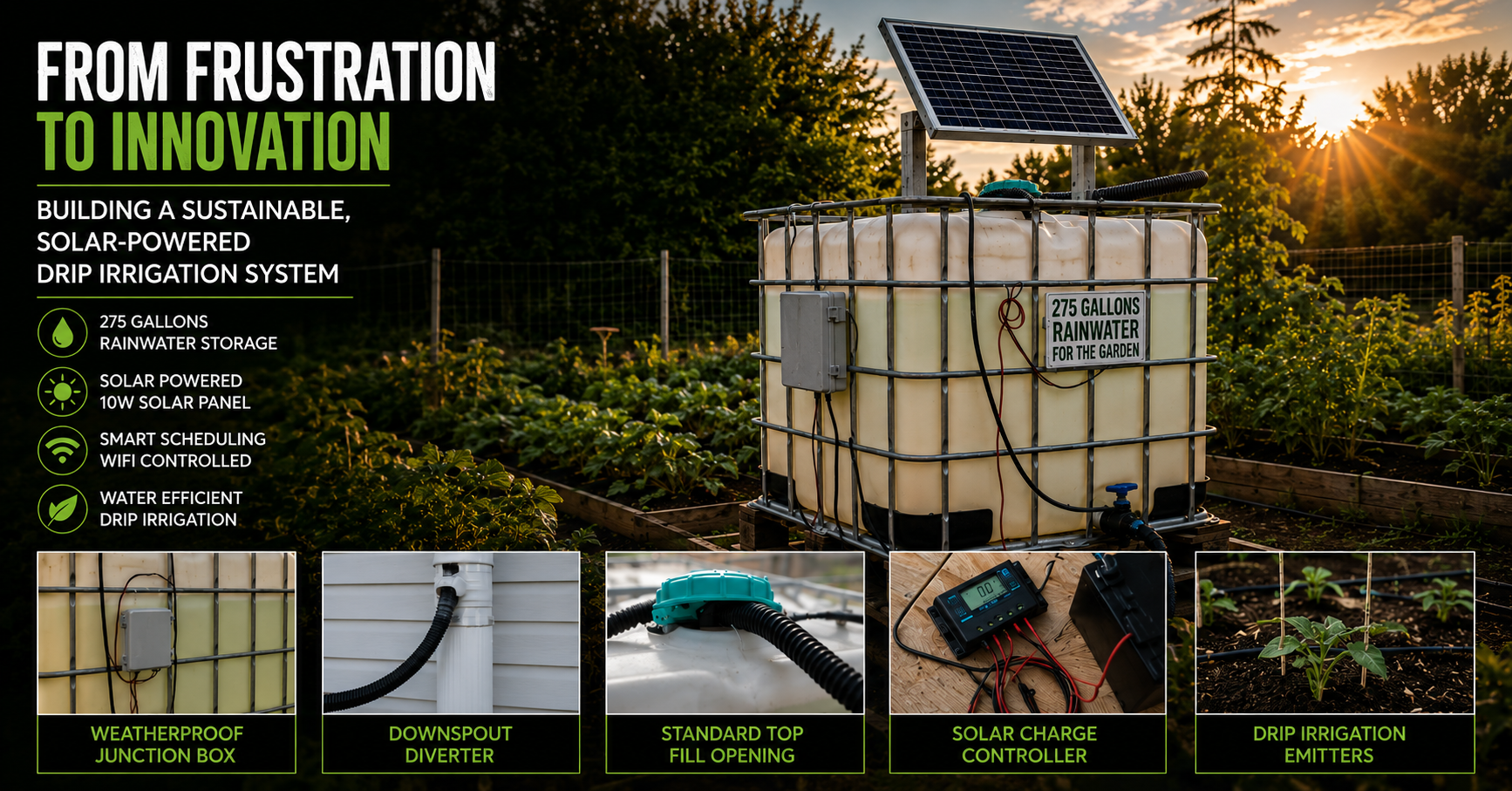
Our system collects rainwater through a downspout diverter into a 275-gallon IBC tote. The pump is powered by a 10W solar panel charging a 12V battery. Zero grid electricity. Zero municipal water. Completely self-sustaining through a Pennsylvania summer.
That’s the goal. Here’s how we got there.
The Origin Story: All-in-One Kits Are a Single Point of Failure
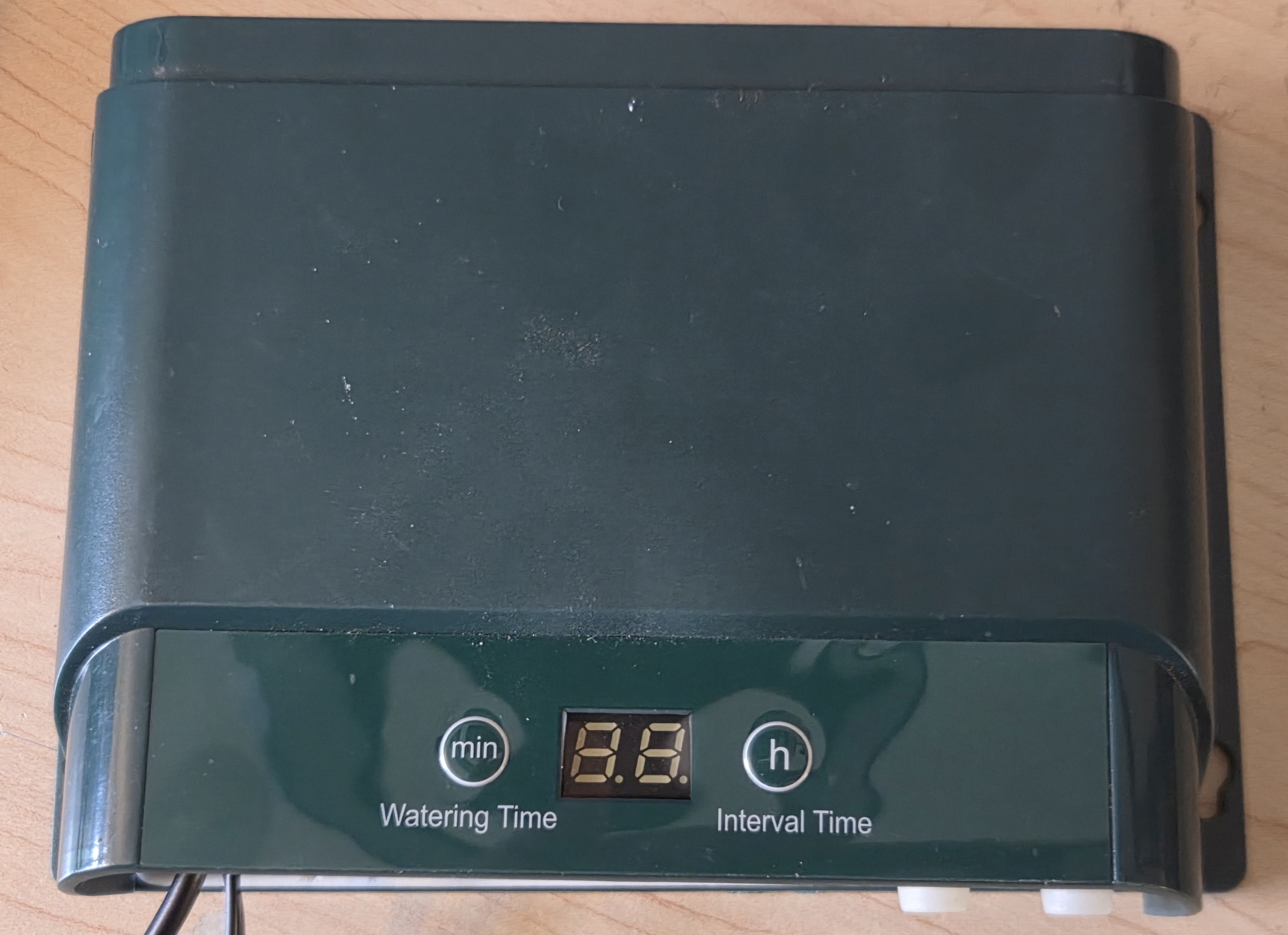
About two years ago I started looking for a way to automate watering my flower beds. I didn’t want to run electrical or plumbing — I wanted something simple, self-contained, and solar powered.
I bought all-in-one solar drip irrigation kits. You’ve probably seen them: a small solar panel, a tiny pump, some tubing, and a basic timer, all integrated into a single unit. When they worked, they were great. The flowers got watered, I didn’t have to think about it, and the whole thing ran off sunlight.
But when they failed, they failed completely.
The problem with all-in-one systems is that they’re a single point of failure. One component gets water intrusion — and these things are sitting outside all summer — and the entire unit is compromised. There’s no fixing it. You submit a warranty claim, wait for a replacement, and your garden goes unwatered in the meantime. I went through this cycle more than once.
The other issue was timing. The built-in timers on these kits are notoriously basic. You get limited control over when and how long the system runs, and there’s no way to adjust it remotely. Standing over a garden bed trying to program a cheap timer is not fun.
I wanted something different. Something modular, where if the pump fails, I replace just the pump. If the controller fails, I replace just the controller. Something with real scheduling capability. Something I actually understood and could maintain myself.
Version 1: The Flower Garden Proof of Concept
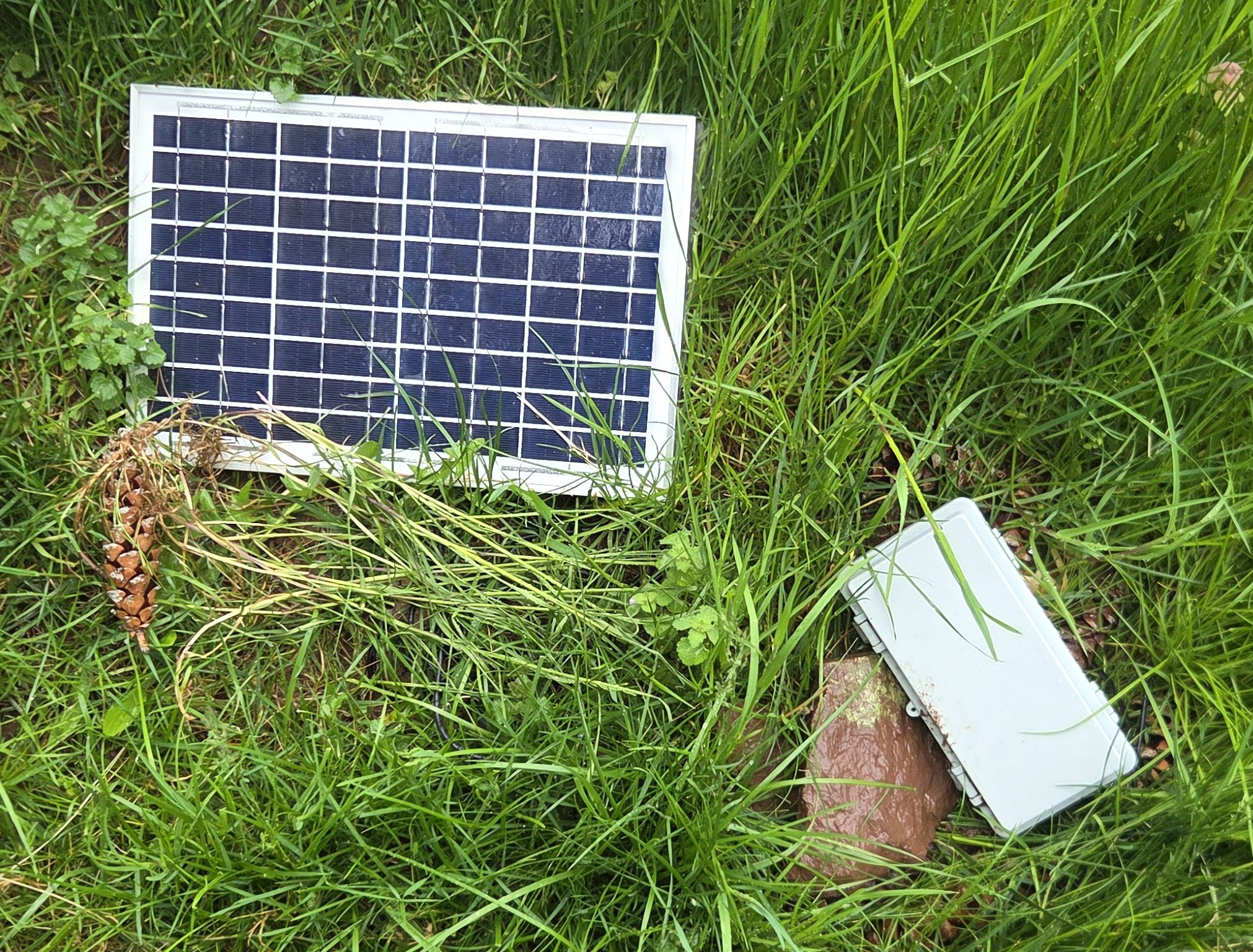
The first modular build was a simple flower bed watering system built for just over $60. The concept was straightforward: use an existing downspout drain grate as a water reservoir, run a solar-powered pump on a WiFi timer, and deliver water to the flower beds through a simple drip line.
Key components:
- Small 5V USB submersible pump
- Seengreat solar MPPT charging module
- Tuya WiFi smart switch for scheduling
- QILIPSU weatherproof enclosure
- 1/4″ drip tubing with a simple T-connector splitting into two bed legs
I used Claude (Anthropic’s AI assistant) to help work through the electrical design, component selection, and troubleshooting throughout the build. Without that support the electrical engineering side of this would have been significantly harder to figure out on my own.
The flower bed system worked. It wasn’t perfect. The pump struggled a bit with elevation changes and the scheduling was limited, but it proved the core concept. Modular components, WiFi scheduling, solar power, all working together for $60. That success gave me the confidence to go bigger.
Version 2: The Full Veggie Garden Build
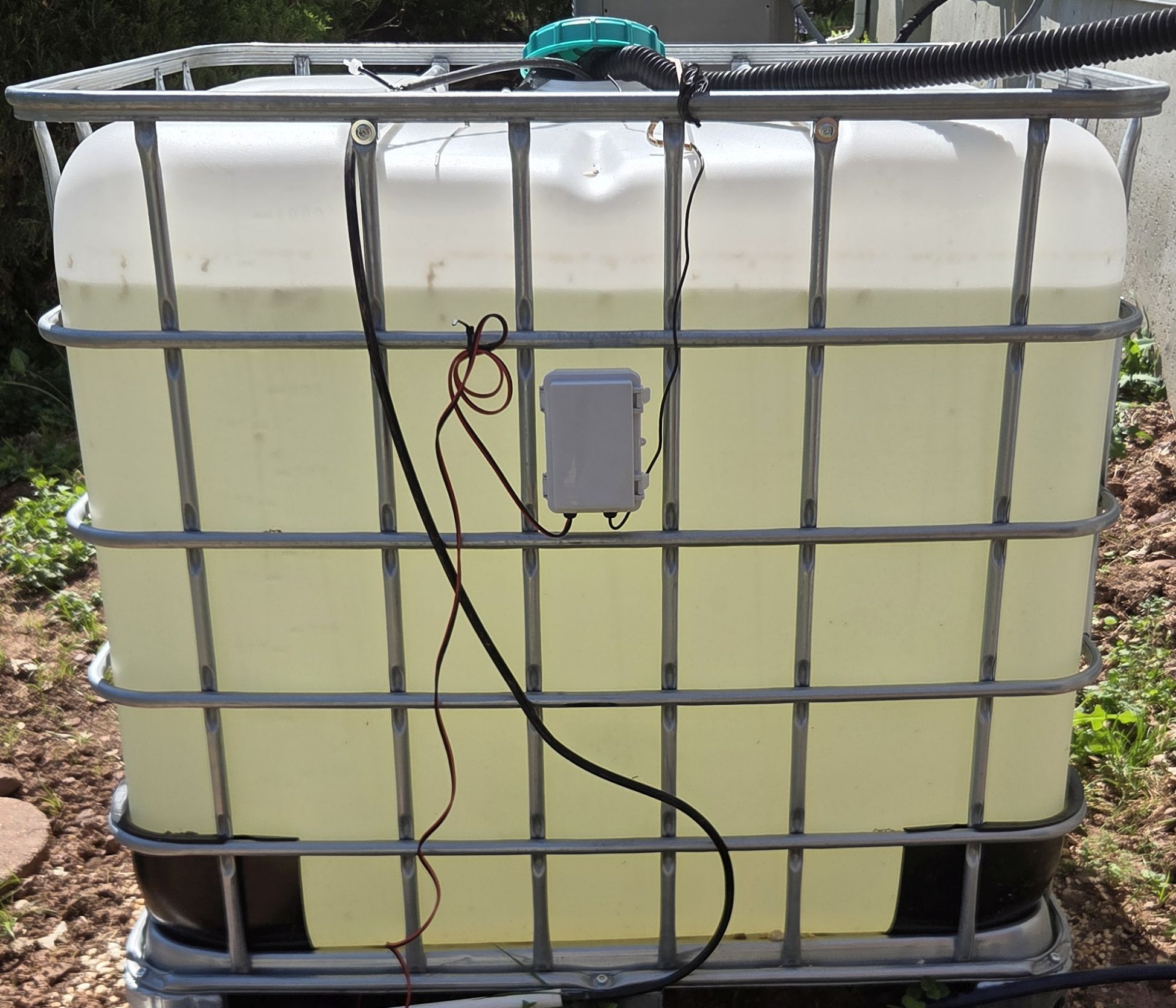
This spring I designed a complete system for the vegetable garden. Bigger water supply, more reliable pump, real WiFi scheduling, and a few bonus features I hadn’t planned on. Here’s everything that went into it.
The Water Source: 275-Gallon IBC Tote
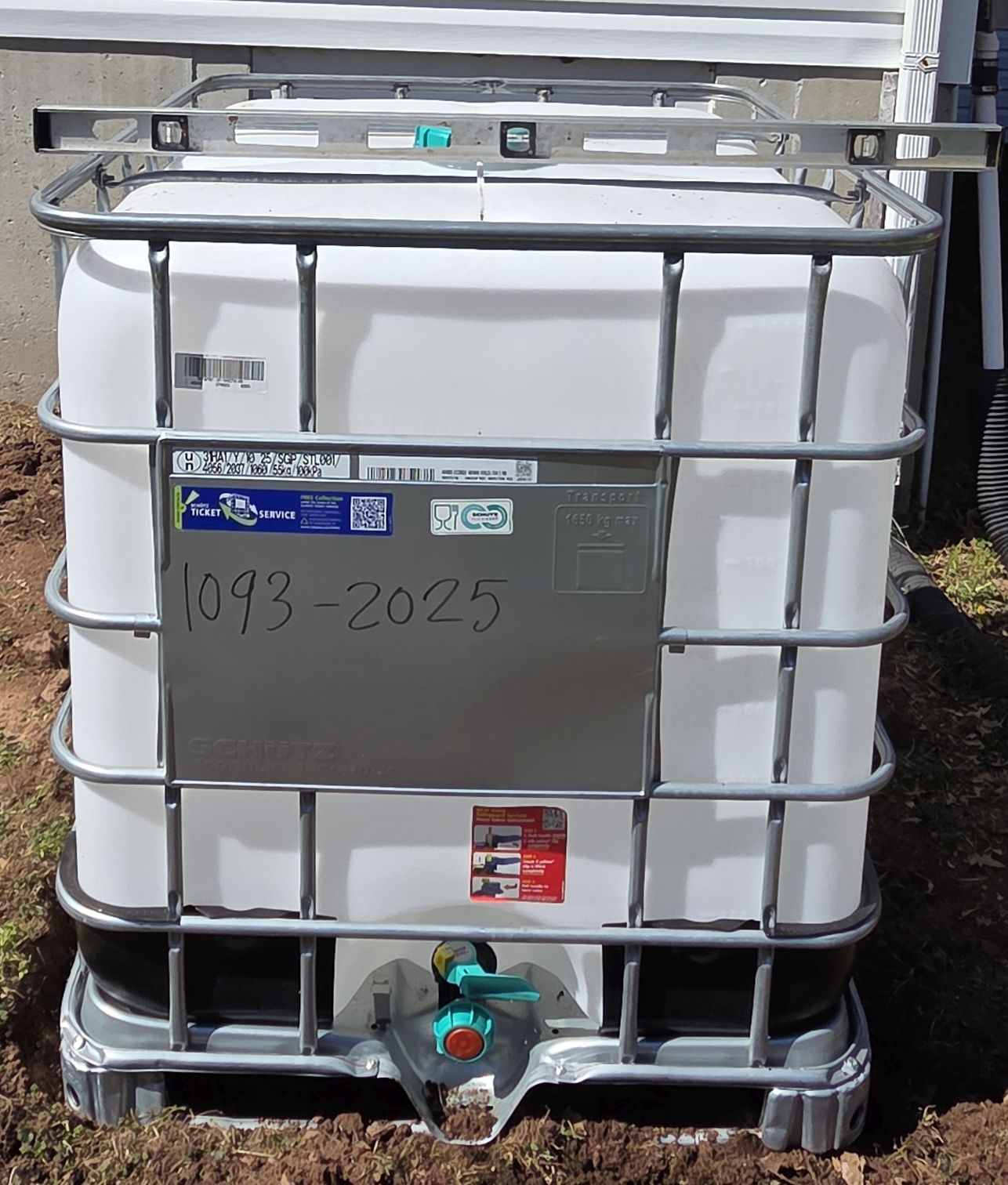
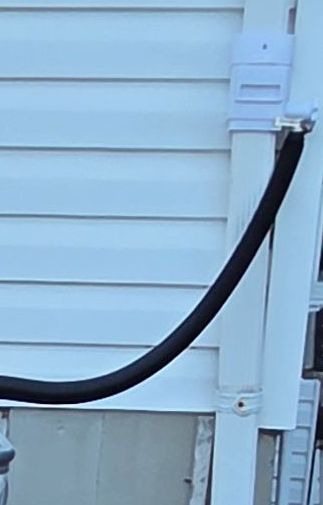
A 275-gallon IBC (Intermediate Bulk Container) tote replaced the drain grate as the water source. These industrial containers are built for liquid storage, sit on a pallet, and have a standard 2″ butterfly valve at the bottom. I connected a downspout diverter to feed it automatically from the roof every time it rains.
At approximately 10 gallons per day of irrigation use across 30 drip emitters, the tote holds roughly 27 days of water with zero rain refill. In a normal Pennsylvania summer it essentially never runs dry.
The Pump
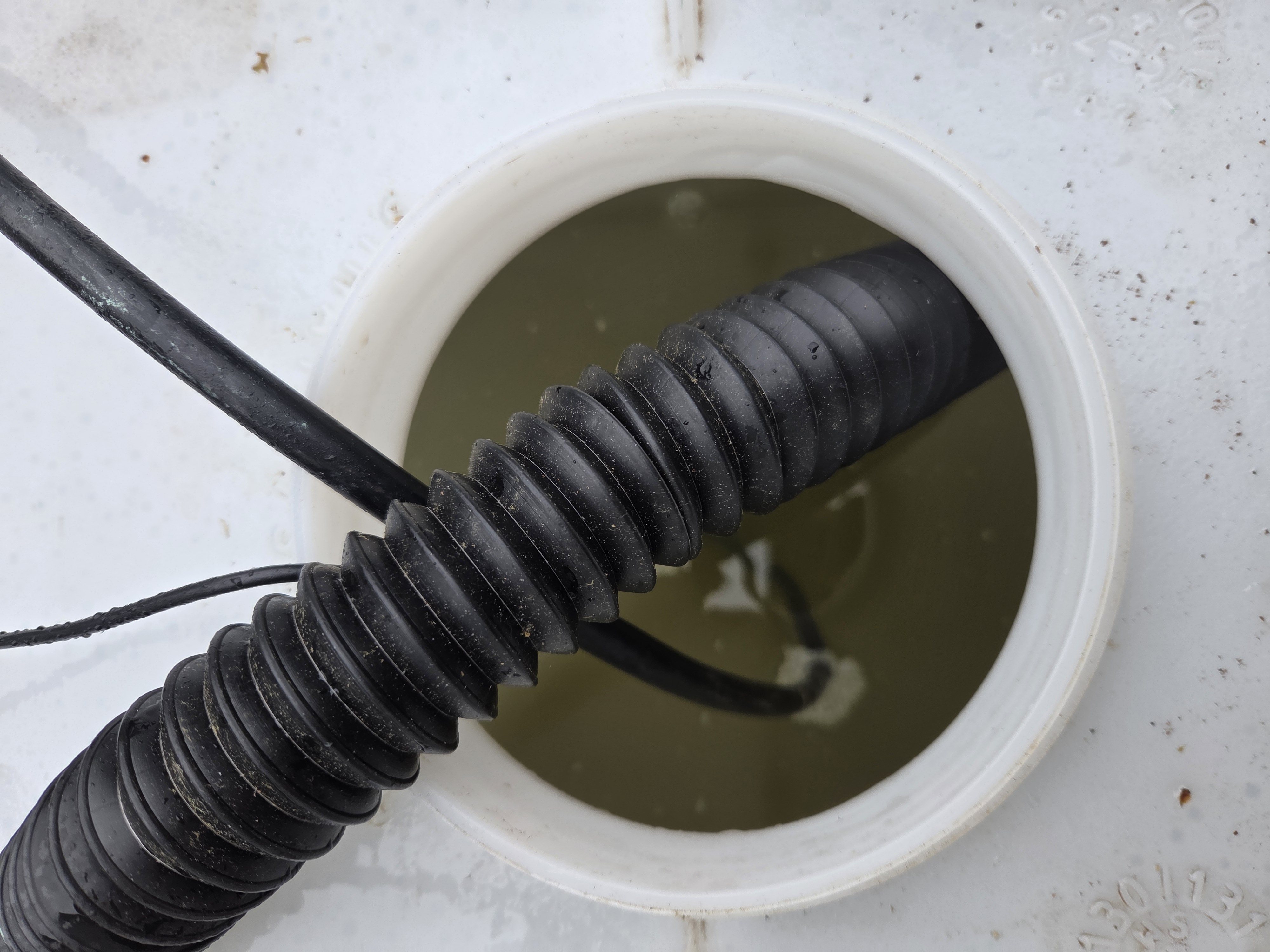
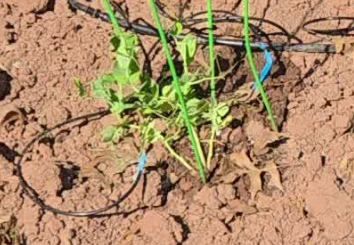
A 12V DC brushless submersible pump (15W, 210 GPH rated) lives inside the tote through the standard 150mm fill opening at the top. In the real world with drip emitters creating back pressure, actual flow is far lower than the rated maximum, which is exactly what you want for slow, even drip irrigation.
The pump connects through a brass barb fitting to 1/4″ distribution tubing, with an inline check valve immediately at the tote exit to prevent siphoning when the pump stops.
Important lesson learned: drip emitters are not optional. When I removed them thinking it would simplify things, I lost all pressure distribution — the first line got everything and the last lines got nothing. The emitters create the back pressure that forces water evenly through the entire system. Put them back.
The Brain: Solar + Battery + WiFi Relay
All electronics live in a SOCKiTBOX Medium (Model 285) mounted under the pool deck, weatherproof, out of direct sun, and completely hidden from view.
Solar panel: 10W, 18V, mounted outside the privacy screen facing south. Bare wire ends route through the SOCKiTBOX silicone cable slot.
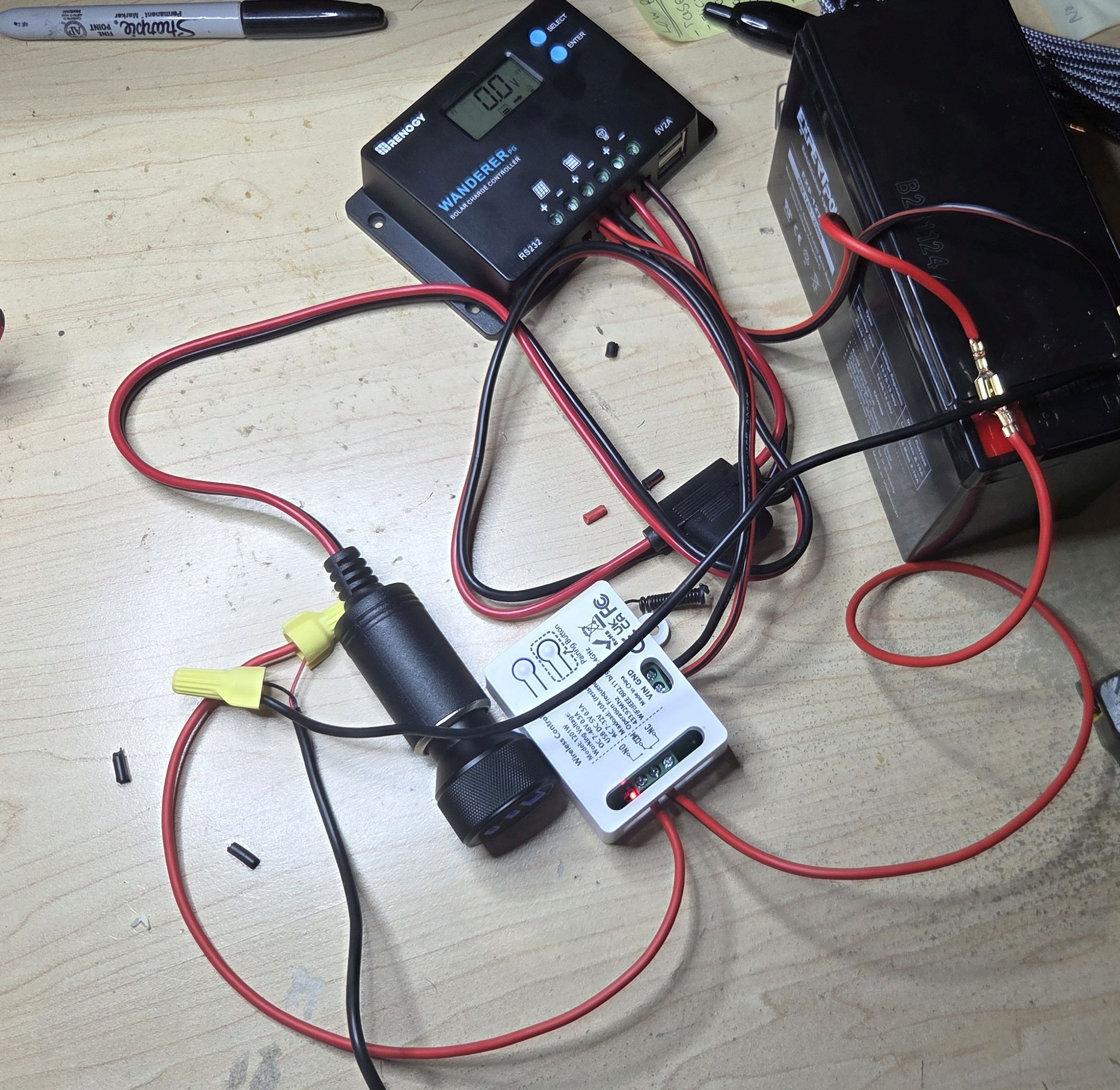
Charge controller: Renogy Wanderer 10A PWM — manages charging in four stages (Bulk, Boost, Float, Equalization), protects the battery from over-discharge, and powers the phone charging circuit. Configured to load mode 17 (always-on with low voltage disconnect protection).
Battery: ExpertPower 12V 7Ah sealed lead acid AGM — 84Wh of storage. At roughly 6Wh per day for irrigation alone, the battery could run the pump for nearly two weeks with no solar input at all. In practice the panel keeps it topped up daily.
WiFi relay: DieseRC Tuya 1-channel relay, configured in the Smart Life app to fire at 8:00 AM and 8:00 PM for 10-minute watering cycles. Controllable manually from anywhere via the app. Also includes RF remote clickers for backup manual control. At $21 this is the best value component in the entire build.
The Wire Run
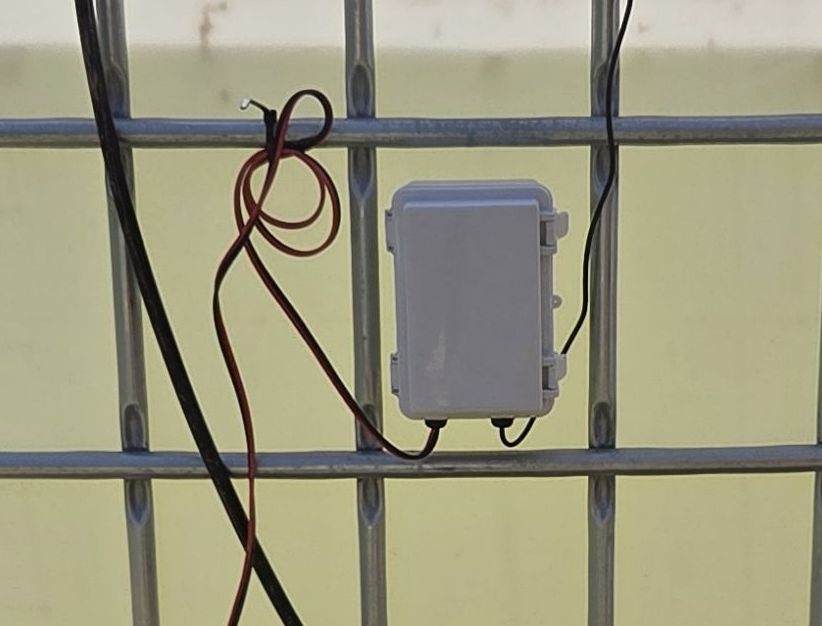
From the SOCKiTBOX, 14AWG wire runs under the deck joists zip-tied every 2-3 feet, then through PVC conduit along the foundation, and finally connects to a Zulkit IP65 junction box mounted on the IBC tote’s cage rail with outdoor velcro straps.
Inside the junction box, wire nut connections join the relay circuit to the pump leads, completely weatherproof inside the sealed box, and easy to disconnect every October and reconnect every May.
Bonus: Poolside USB Charging Station
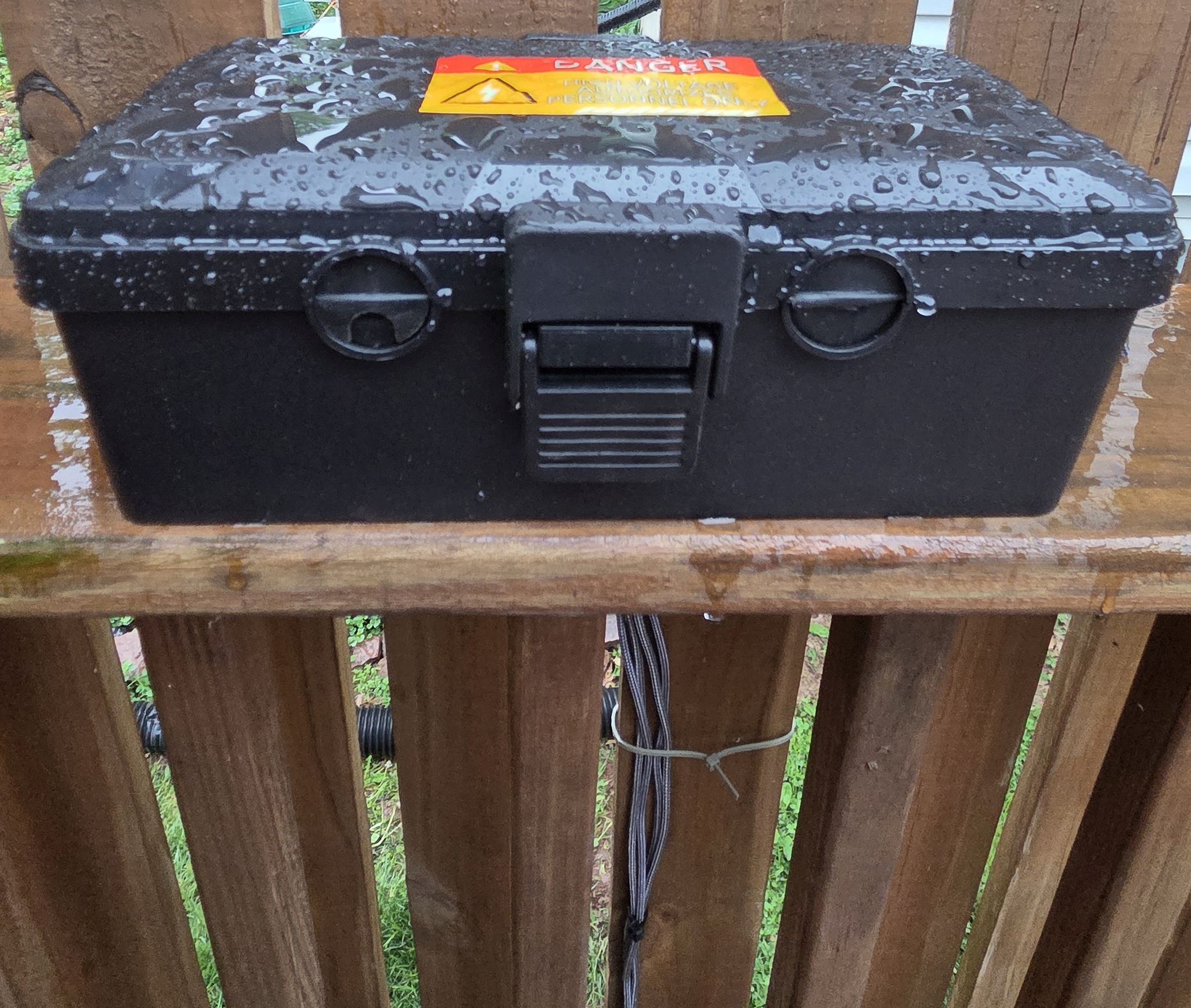
While running wire under the deck anyway, I added a phone charging circuit off the Renogy’s load terminals. A Nilight cigarette lighter socket wired to the load terminals powers a 67W car charger. Two fast-charge USB-C cables and two standard USB-A cables (from the Renogy’s built-in ports) route under the deck and up through natural gaps between the deck boards, with the ends stored in a weatherproof Wowbox on the deck surface.
Four charging spots at the pool, completely off-grid and solar powered.
The Daily Power Budget
| Load | Daily Usage |
|---|---|
| Irrigation pump (2×10 min) | ~6 Wh |
| Phone charging (variable) | ~20-60 Wh |
| Controller self-draw | <1 Wh |
The 10W panel produces 25-40 Wh on a sunny Pennsylvania day. Irrigation is well within budget all season. Phone charging is the variable, and the Renogy’s load mode 17 handles over-discharge protection automatically.
Hard Lessons Learned
Thread standards will ruin your day. The pump uses 1/2″ BSP (British Standard Pipe) threading. Most garden hose fittings are 3/4″ GHT (Garden Hose Thread). They look nearly identical and are completely incompatible. Budget extra time for the fitting chain and test fit everything before committing.
Check valves are not optional. Without an inline check valve at the pump outlet, the system siphons water back into the tote every time the pump stops. A $3 drip irrigation check valve at the tote exit solved it completely.
Drip emitters create the pressure that makes the system work. Remove them and you lose even distribution across the line.
The WiFi relay is the star. Real scheduling, remote control, RF backup. It’s what the all-in-one kits never had.
Modular wins. Every component can be replaced independently. The pump, the controller, the battery, the relay. None of them take the whole system down if they fail.
Total Investment
- Version 1 (flower garden): just over $60
- Version 2 (veggie garden + poolside charging): under $150
- Combined: under $215 for two completely independent off-grid irrigation systems
A Note on AI-Assisted Engineering
I want to be transparent about how this build came together. I used Claude, Anthropic’s AI assistant, as my electrical engineering and design consultant throughout both builds, working through every component choice, wiring diagram, water pressure calculation, thread standard compatibility issue, and troubleshooting problem in real-time conversation during the build.
Without that support, the electrical engineering side of this project would have been a much steeper climb. If you’re tackling a similar project and hitting walls on the technical side, I’d encourage you to explore that kind of AI-assisted problem solving. It changed what I was able to accomplish.
What’s Next
The IBC tote has capacity for a second outlet, and the modular architecture is proven. A front lawn watering system using the same core components is on the drawing board. More on that when the build happens.
For now, the vegetable garden waters itself twice a day, phones charge at the pool, and the whole thing runs on Pennsylvania sunlight and rainwater. Not bad for a summer project.
Weather-Aware Automation: The Engineering Layer
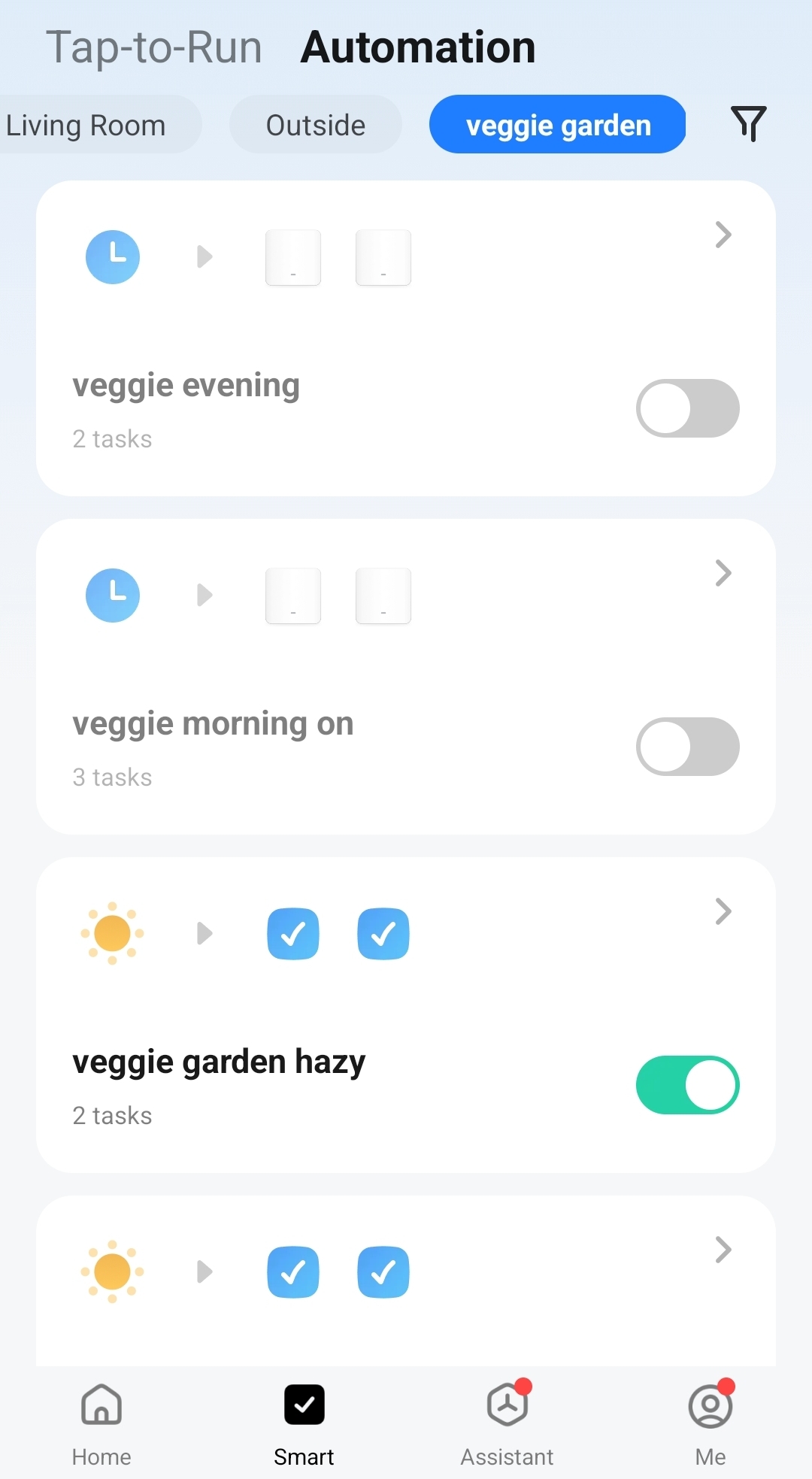
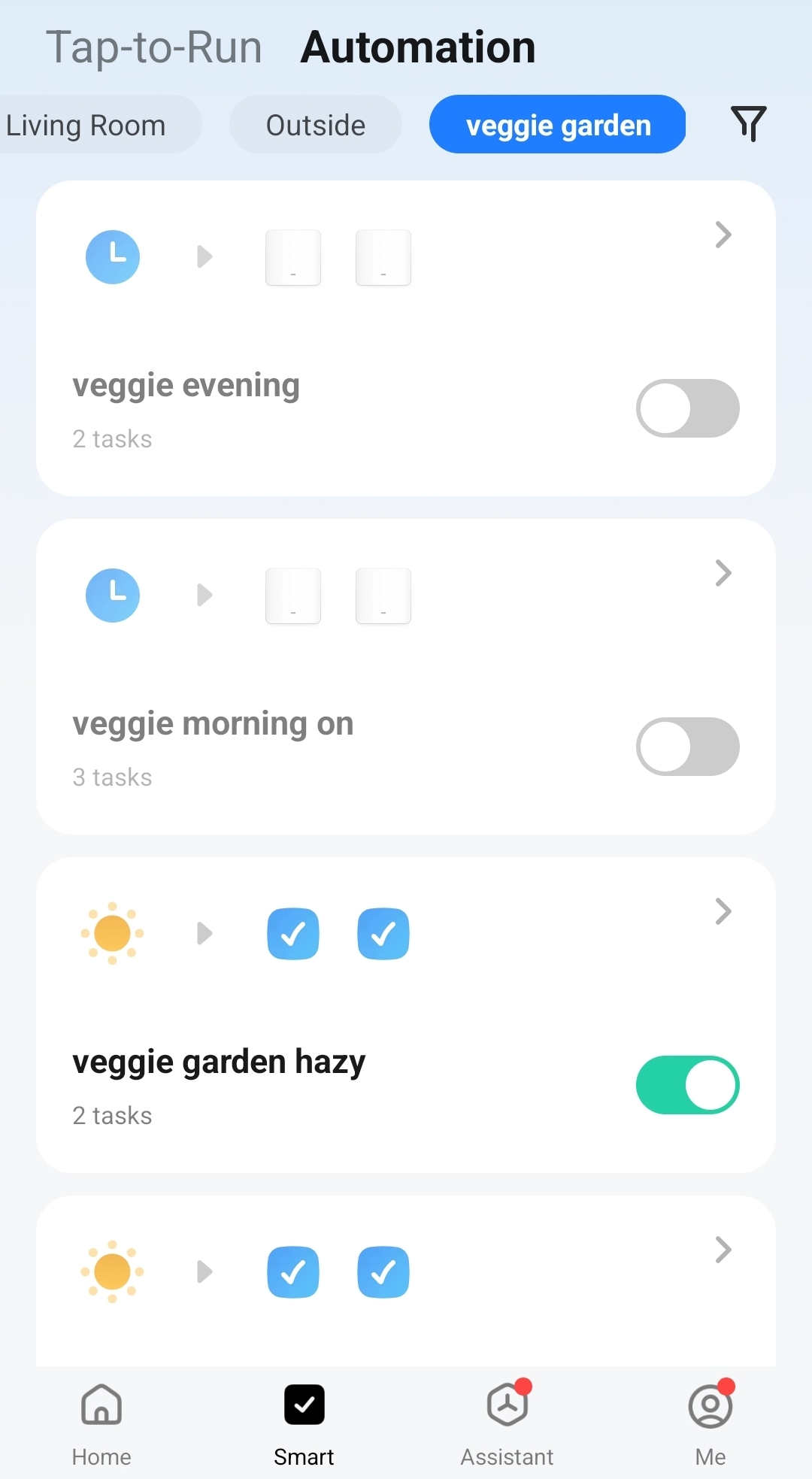
One of the most satisfying parts of building on top of the Tuya/Smart Life ecosystem is the automation logic available out of the box. After the physical build was complete, I added a weather-aware layer that makes the system genuinely hands-off.
The Problem
Running irrigation on a fixed schedule means watering even when it’s raining. That wastes water and over-saturates the soil. The all-in-one kits had no solution for this at all.
The Solution: Event-Driven Scene Automation
Using Smart Life’s automation engine, I built a simple event-driven logic stack:
IF Weather condition: Rainy (Greater Philadelphia area)
THEN Disable “Veggie Morning” automation AND disable “Veggie Evening” automation
IF Weather condition: Sunny, Cloudy, or Hazy
THEN Enable “Veggie Morning” automation AND enable “Veggie Evening” automation
The morning and evening watering cycles are each their own scene: turn on the relay, run a 600-second timer, power off. The rain automation disables those scenes entirely rather than just sending an off command to the switch, which ensures the schedule cannot fire even if the device receives a conflicting signal.
When weather clears, the scenes re-enable automatically and the next scheduled cycle runs as normal. Zero manual intervention.
The Water Savings Math
For the Greater Philadelphia area, May through September averages roughly 20-25 rainy days across the season, or about 4-5 per month. At 10 gallons per irrigation day skipped, that’s approximately 200-250 gallons saved over the season from the rain skip automation alone.
But the real efficiency gain is the double effect: on a rainy day the system skips irrigation AND the downspout diverter is simultaneously adding 50-100+ gallons back into the tote from roof runoff. A good storm both conserves usage and replenishes supply for the next dry stretch.
The result is a system that manages its own water budget without any input from me. That’s the engineering win.
What Modular Design Makes Possible
The vegetable garden now waters itself twice a day, skips cycles when it rains, refills from the roof, and charges phones at the pool. All of it runs on sunlight and rainwater. Two seasons of frustration with off-the-shelf kits led to a system that actually works, costs under $215 for both builds, and gets smarter every time I add an automation. That is what modular design makes possible.